Let’s get straight to the point. Nobody wakes up one morning, looks in the mirror, and says, “You know what? Today I’m going to start worrying about crow’s feet.” It just doesn’t work that way. It sneaks up on you. One random Tuesday, you catch your reflection in terrible bathroom lighting, and suddenly that little line next to your mouth seems to have a mind of its own. Deeper than you remembered. And you’re like, wait, when did that happen?
That is the nature of aging. It’s not a single event. You don’t really see this gradual, creeping process until it has settled in.
So, the big questions: When should we actually start caring? And with all the noise out there, what actually delivers results without costing a lot?
Here’s what actually works, based on real science. We’ll also cover a new QiYuqin line that’s worth knowing about.
Why Anti-Aging Matters
Here’s something worth paying attention to. By your 30s, your body is quietly changing gears. Studies show that from age 30 onward, you start losing about 1% of your collagen every single year. It’s like your skin’s internal scaffolding is slowly, methodically, being taken apart.
But here’s where it gets really interesting. A massive study from Stanford found that aging isn’t a straight line. It’s more like a cliff. Actually, there were two of them. One hits around age 44, and the next one comes for you at 60. Your molecules and microbiome go through these big, sudden shifts. It affects way more than just your skin, from metabolism to heart health to just about every other system in your body.
Therefore, applying a cream is not a sign of fear of getting older. It’s about being smart and proactive. This means caring for your largest organ so it can perform its function and look good at the same time. Dr. Keri Peterson, who’s an internist, says that around 40 is when you absolutely need to get serious about this stuff, metabolism and skin included.
What Age Should You Start?
There’s no magic number. And anyone who tells you different is probably trying to sell you something.
| Stage | What’s Happening | What to Do |
| 20s | Skin barrier is strong, cell turnover is fast. Collagen starts to decline. | Foundation: Sunscreen (SPF 30+), gentle cleansing, lightweight moisturizer. |
| 30s | Cell turnover slows (hello, dullness). First fine lines might appear. | Boost: Add antioxidants (Vitamin C) and start a gentle retinol. |
| 40s | Skin thins, collagen drops significantly. Stanford study shows a major aging “wave.” | Intensify: Up your retinoid game, deeply hydrate, and consider more potent peptides and PDRN. |
| 50s+ | Menopause accelerates skin changes for women; overall skin repair is slower. | Nourish & Protect: Focus on barrier repair, rich moisturizers, and ingredients that boost collagen and firmness. |
A dermatologist named Dr. Chiu Pin-chi put it well. In your 20s, you’re preventing damage. In your 40s, you’re actively trying to rejuvenate and boost what’s fading. You’re working toward the same goal, but the strategy looks totally different at each stage.
How Do You Actually Fight Aging?
This is the golden rule, and it’s surprisingly simple.
- Prevent
Up to 90% of how your skin ages is from the sun. That is actually good news, because the most effective anti-aging step is also the simplest one.
You need to wear SPF thirty every single day. Rain or shine. Winter or summer. Even when you are indoors near a window, because UVA rays go straight through glass. This is not optional. If you skip this step, the rest of your routine will not matter much.
- Protect
Your skin barrier is your first line of defense. It keeps moisture in and irritants out. When it is damaged, your skin looks older, feels tighter, and cannot defend itself properly.
The fix is simple. Be gentle with your skin. Avoid harsh soaps and over-exfoliating. Use lukewarm water instead of hot water. Your face should feel comfortable after cleansing, not tight and squeaky clean.
- Rejuvenate
The real work starts now. This is where active ingredients come into play. Cell renewal is accelerated by retinoids. Vitamin C fights environmental damage. Peptides tell your skin to make more collagen. Rose PDRN and other more recent ingredients function at a deeper cellular level.
You don’t have to use them all at once. Take your time and add one new ingredient at a time. Before applying another, let your skin settle. Over time, this phase produces noticeable outcomes.
Ingredients That Actually Do Something
Not all skincare is created equal. Here’s the shortlist of clinically-backed ingredients.
| Ingredient | What It Does | Who It’s For |
| Retinoids (Vitamin A) | The gold standard. Boosts collagen, speeds cell turnover, reduces fine lines and wrinkles | Anyone looking for serious anti-aging. Start slow to avoid irritation. |
| Vitamin C | A powerful antioxidant that brightens skin and protects against environmental damage (pollution, UV rays) | Morning routine. Good for dullness and pigmentation. |
| Peptides | Signal your skin to produce more collagen. Helps firm and smooth | Great for sensitive skin that can’t tolerate retinoids. |
| Rose PDRN | The new kid on the block. A plant-derived ingredient that supports skin regeneration and mitochondrial health—the energy centers of your cells | Anyone looking for advanced repair and “skin longevity.” |
| Niacinamide (Vitamin B3) | Strengthens the skin barrier, evens skin tone, and reduces inflammation | Great for all skin types, especially sensitive or acne-prone. |
The Rose PDRN Difference: What QiYuqin Is Doing
You might have come across PDRN in injectable treatments, where it’s traditionally derived from salmon DNA. QiYuqin took a different approach, extracting it from rose stem cells instead.
A 2025 study showed that this Rose PDRN significantly protects mitochondrial function and helps combat environmental aging. Basically, it helps your skin cells produce energy and fight off the daily stress of UV and pollution. It’s like giving your cells a shot of espresso.
Now, how does this actually fit into a daily routine? Let’s get specific.
In the Morning: Wake Up and Refresh
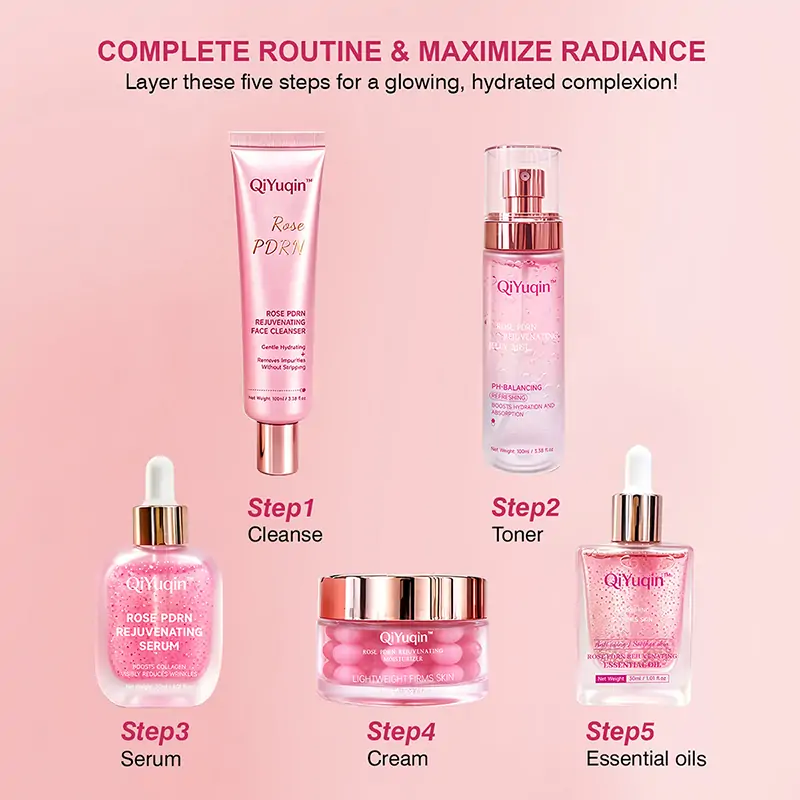
Start with the Rose PDRN Rejuvenating Face Cleanser. It’s gentle, hydrating and it gets rid of the leftover impurities from the night without leaving your face feeling tight and dry. It’s a good, solid start to the day.
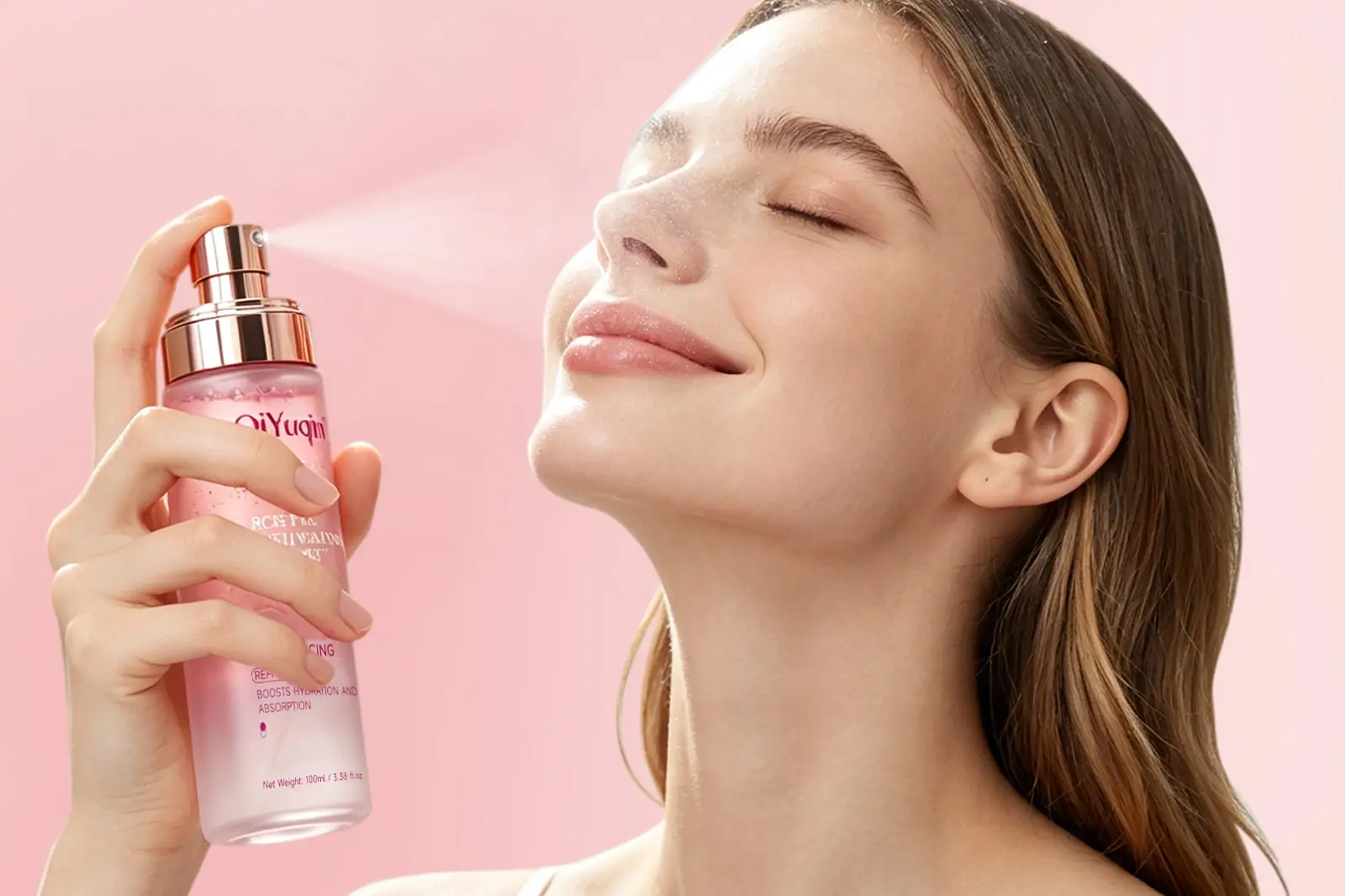
Then, grab the Rose PDRN Rejuvenating Jelly Mist. People skip the mist step all the time, but it’s a game-changer. It balances your skin’s pH and gives it a quick hydration boost. More importantly, it preps your skin so the next products absorb way better. Think of it as priming a wall before you paint.
And please, do not forget your sunscreen. The QiYuqin Brightening Sunscreen offers SPF 50+ and PA+++ protection against both UVB and UVA rays. It comes in two shades. One has a brightening tone-up effect, and the other has a natural skin tone finish. You can choose the one that suits your preference. Both are lightweight and non-greasy. They help protect your skin while giving it a subtle, even-looking glow.
In the Evening: The Real Work Gets Done
Give your skin what it needs because it is in repair mode at this time.
Clean twice if you used sunscreen or makeup. Use an oil-based cleanser first, then use the Rose PDRN Face Cleanser once more. This gets everything off.
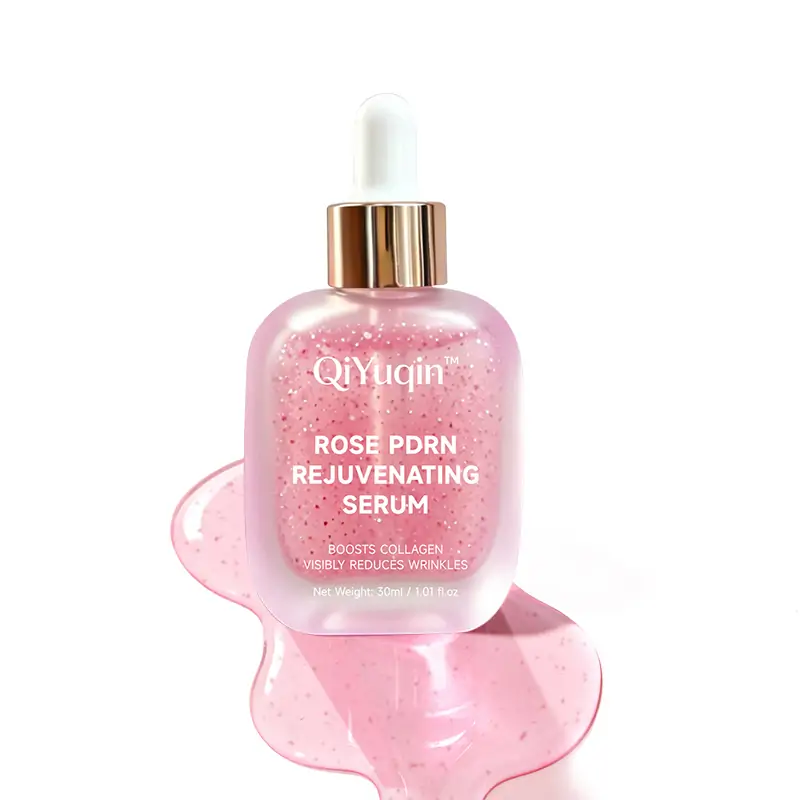
Then, apply the Rose PDRN Rejuvenating Serum. This is your heavy hitter. It’s packed with a high concentration of Rose PDRN to boost collagen and visibly reduce wrinkles. A reviewer for a similar product noted that it gave their skin a radiant, inner shine.
After that, seal it all in with the Rose PDRN Rejuvenating Moisturizer. This is lightweight but works well. It firms skin, minimizes the look of fine lines and locks in all the moisture. A good moisturizer should feel pleasant on your skin, not like a thick, oily layer sitting on top.
A few nights a week, if your skin is feeling particularly dry, add in the Rose PDRN Rejuvenating Essential Oil. This is your nourishing and soothing step. Mix a drop or two into your moisturizer, or just pat it onto dry patches. It calms things down and keeps your skin nice and supple.
FAQs: Real Questions, Straight Answers
- Is it too late for me to start? Seriously?
No. It’s never too late. If you’re 50, 60, whatever, starting now will improve your skin’s health. The Stanford study shows those aging waves at 44 and 60, which actually makes it the perfect time to double down on your routine. It’s about making your skin healthier, not turning back the clock.
- I have sensitive skin. Am I going to react to all this?
Probably not, especially with the QiYuqin line. It’s formulated to be gentle and soothing. If you’re worried about retinoids, start with a lower concentration and apply it over your moisturizer. It’s called buffering, and it’s a lifesaver for sensitive types.
- What’s the single biggest mistake people make?
Skipping sunscreen. Dr. Chiu Pin-chi is always saying that people spend a fortune on serums and treatments but can’t be bothered with daily SPF. It’s like buying a new roof and leaving the windows open during a storm.
- How is Rose PDRN different from retinol?
They don’t compete; they work together. Retinol is the classic for accelerating cell renewal. Rose PDRN is newer and works at a deeper level, improving how cells function and manage stress. It’s a great “one-two” punch.
The Bottom Line: Where Do You Go From Here?
Aging is just a part of life. Not a tragedy, not a failure. But how well your skin handles it? That is partially in your hands. The plan is simple: prevent with sunscreen, protect with gentle care, and rejuvenate with ingredients that have real science behind them.
Here is your next step. Take a look at the QiYuqin Rose PDRN Rejuvenating Line and see which products fit your current routine.
Not sure where to start? The cleanser and moisturizer are great entry points, or you can go all in with the full routine for maximum results.
Visit the product page below, read through the details, and pick what works for you. Start today, because your skin won’t wait.
Explore the QiYuqin Rose PDRN Collection and Build Your Routine
References
Stanford Study on “Non-linear” Aging. Nature Aging, cited by Women’s Health.
Interview with Dermatologist Dr. Chiu Pin-chi on Anti-Aging Concepts.
“Skin Longevity” Ingredients and Dermatologist-Recommended Actives.
Kenvue Clinical Data on 0.1% Stabilized Retinol. Journal of Drugs in Dermatology, April 2024.
Study on Rose-Derived PDRN and Skin Cellular Health. Directory of Open Access Journals (DOAJ), 2025.
American Academy of Dermatology (AAD) 2025 Annual Meeting – Research on Retinoid Application.
Online Resources
American Academy of Dermatology (AAD) – Official website of the leading dermatological organization. Provides patient education on sunscreen and anti-aging skincare.
Visit: https://www.aad.org
PubMed – A free search engine for accessing scientific research papers and clinical studies. Indexes the Nature Aging Stanford study and the Journal of Drugs in Dermatology retinol analysis.
Visit: https://pubmed.ncbi.nlm.nih.gov/
Directory of Open Access Journals (DOAJ) – A community-curated online directory that indexes and provides access to high quality, open access, peer-reviewed journals. Source of the Rose PDRN study .
Visit: https://doaj.org/
MDPI – An open-access scientific publisher providing the full text of the Rose-derived PDRN study .
Visit: https://www.mdpi.com
Journal of Drugs in Dermatology (JDD) – A peer-reviewed publication for clinical dermatology. Source of the clinical data on 0.1% stabilized bioactive retinol .
Visit: https://jddonline.com/