What exactly is Rose PDRN?
PDRN (Polydeoxyribonucleotide) is a fancy term for “pieces of DNA.” These pieces have a defined length and sequence and typically weigh between 50 and 1,500 kDa, with the majority falling around 132 kDa.
Traditionally, it comes from salmon. It’s been used for years to regenerate skin and heal wounds, and it is extremely effective. But here’s where it gets interesting: instead of using fish, we can now extract the identical DNA fragments from roses. Not rose extract or rose oil, but genuine DNA from the plant itself.
The technology behind this is quite astounding. It uses advanced biotech extraction and purification procedures to collect high-purity DNA fragments from certain rose cultivars. And what’s the best part? You retain all of the biological action that makes PDRN so effective. It continues to repair, renew, and promote collagen, exactly like the salmon version. However, it also provides the natural mildness, stability, and safety that you would expect from a plant-based substance. So you have the best of all worlds: potency without the fish.
How is Rose PDRN made?
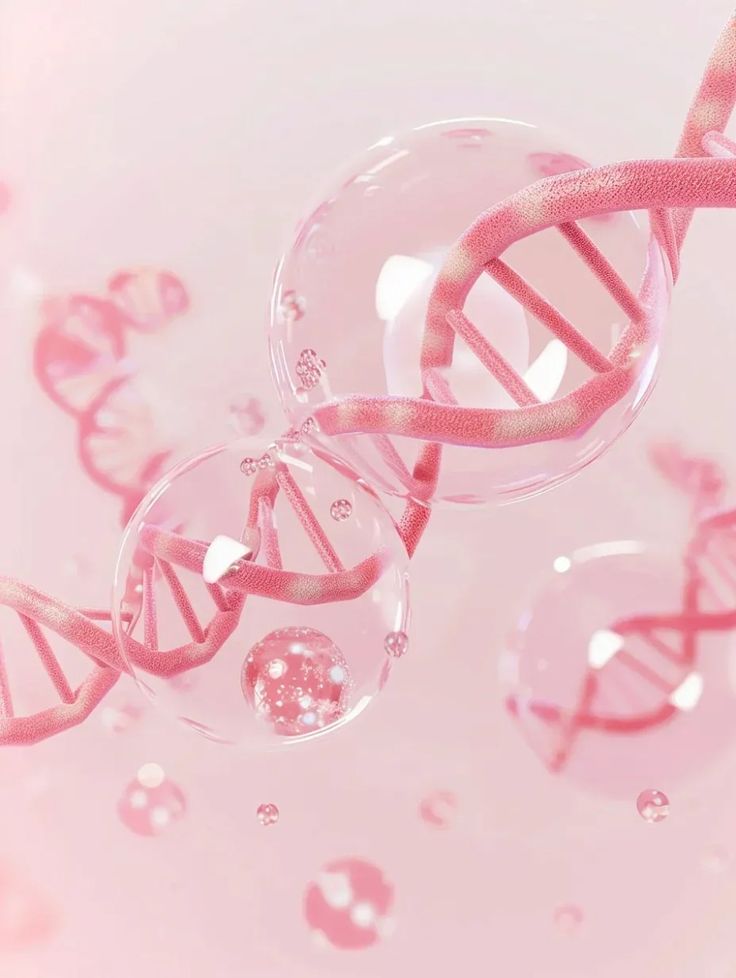
You might be wondering how you can actually get DNA from a rose.
First, not every rose works. Certain cultivars, such as Damask or Centifolia, are chosen because they produce better quality DNA. After harvesting, the petals undergo a low-temperature cell disruption process, which involves cracking the cells open without destroying the fragile nucleotide chains inside.
Enzymatic hydrolysis removes unwanted proteins, followed by a series of membrane filtration steps to separate the DNA fragments to the correct molecular weight.
The end result is a high-purity, biologically active PDRN that is batch-tested for consistency. It is not rose water. It is not rose oil. It’s biotechnology, pure and simple.
What Makes Our Rose PDRN Unique?
Not all PDRN is the same—and this isn’t just marketing jargon.
Two characteristics distinguish PDRN: molecular weight and purity. Let’s break it down.
Molecular weight impacts how deep the PDRN can penetrate and how well it interacts with your skin cells. Too heavy? It just sits there on the surface. Too light? It falls apart too quickly to do much good. Our lands are right around 132 kDa—which is the sweet spot where stability meets bioavailability. Exactly where you want it.
Purity is the other side of the equation. Cheaper PDRN often contains residual proteins or other impurities that can irritate sensitive skin. Ours goes through multiple rounds of purification, so you’re getting the active DNA fragments—and pretty much nothing else. We test every batch for consistency, so the bottle you open today is the same as the one you bought last month.
That’s the difference between an ingredient that looks good on a label and one that actually earns its place in your routine.
Why DNA fragments? Science in Plain English
Your skin takes a beating every day. UV, pollution, stress—you name it. All of these factors combine to cause DNA damage.
Yes, your cells do heal themselves. However, as you get older—or spend too much time in the sun—the repair process slows way down.
Think of Rose PDRN as a delivery truck carrying spare parts. It provides the exact nucleotide building blocks that your injured cells need to speed up their own repair machinery. It doesn’t just sit on the surface, making things feel nice; it goes within and helps cells repair what’s damaged.
This is why PDRN is referred to as “regenerative,” rather than simply “hydrating” or “antioxidant.” It works deeper. That is where the real results come from.

What Science Says
Let’s be honest: PDRN isn’t some marketing gimmick. There is actual science behind it.
Consider a 2026 study published in PLOS ONE; over the course of 28 days, researchers discovered that a topical PDRN formulation improved wrinkles, skin thickness, and density about twice as much as retinol. Twice. That is not nothing. The study found that PDRN activates the PI3K-Akt and TGF-β/Smad pathways, boosting the skin’s natural repair system.
Then there’s a 2025 peer-reviewed study focused on rose-derived PDRN, particularly. It turns that it maintains mitochondrial function, reduces oxidative stress, and regulates autophagy-related pathways in human skin cells exposed to UV and pollution. Translation: it does more than simply cover up the damage; it also helps prevent it from happening in the first place.
What about the safety profile? It has been confirmed as solid by multiple clinical reviews. There were very few adverse effects recorded across all the studies.
So yeah, we’re not just using buzzwords. The data is there. And it’s quite convincing.
What does Rose PDRN actually do?
1. Repair from the ground up.
Got damaged skin cells? Rose PDRN gives them everything they need to rebuild. While that happens, it also stimulates your fibroblasts—the hardworking cells responsible for collagen and elastin—to produce more of what maintains your skin tight and springy. Anti-aging begins with repair and rebuilding.
2. Redness? It also calms that down.
This is where the rose element comes into its own. The PDRN acts as an anti-inflammatory through adenosine pathways—which is beneficial on its own—and then the rose’s natural flavonoids and polyphenols pile on top. They combat irritation from both sides. Skin feels less reactive and less irritated.
3. Hydration that lasts.
This is a two-parter. First, Rose PDRN encourages your skin to create more hyaluronic acid. Second, it strengthens your skin’s barrier, ensuring that all of that hydration does not evaporate into thin air. Do you know how it feels when your skin is still dry an hour after moisturizing? This is transepidermal water loss at work. Rose PDRN helps to break the cycle.
4. Visible anti-aging results.
The goal here is to stimulate collagen production. Lines soften. Wrinkles appear less apparent. Is that sagging around the jawline? It begins to tighten back up. It’s not magic; it’s biology, and everything is working properly.
5. Brightness as a bonus.
The antioxidants in the rose component regulate pigment formation, while PDRN accelerates the natural turnover of skin cells. As a result, dullness vanishes, brightness emerges, and skin tone becomes more even without your conscious effort.
Why Use Rose PDRN in Your Skincare Routine?
Rose PDRN is suitable for all skin types, including oily, dry, sensitive, acne-prone, and mature. It delivers results without irritation; therefore, daily usage is totally fine.
Furthermore, because it is made from plants, it is naturally cruelty-free and more sustainable than animal-based alternatives. Effectiveness and ethics in one ingredient.
What to Expect—and When
Let’s be honest about timing.
Rose PDRN works at two different speeds. The calming and hydrating effects? Those are quick—you’ll often notice them within hours, maybe even minutes. Skin just feels less reactive, more comfortable. That part is almost instant.
The structural changes—firmer skin, fewer lines, more even tone—take longer. Because your skin cells actually have to rebuild themselves, and that’s not a quick process. Realistically? Give it 4 to 8 weeks of consistent use. That’s roughly one full skin renewal cycle. No shortcuts there.
Here’s the thing, though: both types of benefits are happening at the same time. The immediate effects keep you motivated while the deeper repair quietly does its work in the background. It’s not overnight magic, but it is real, lasting change. And honestly? That’s worth waiting for.
One more thing—don’t skip days if you can help it. Missing a day here and there won’t ruin your progress, but it will stretch out the timeline. Consistency really does pay off with this one.
Comparative Advantages: Rose PDRN vs. Other Active Ingredients
| Feature | Rose PDRN | Retinol | Vitamin C | Axit Hyaluronic |
| Primary Mechanism | DNA repair + collagen stimulation | Accelerated cell turnover | Antioxidant protection | Moisture binding |
| Skin Sensitivity | Very low | High | Moderate | Very low |
| Anti-Aging Efficacy | High | Very high | Moderate | Low |
| Hydration Effect | High | Low | Low | Very high |
| Barrier Repair | Yes | May compromise | Yes | Yes |
| Synergistic Potential | Excellent | Limited | Good | Excellent |
Rose PDRN vs. Salmon PDRN: Detailed Comparison
| Aspect | Rose PDRN (PhytoPDRN) | Salmon PDRN |
| Source | Plant-based (specific rose cultivars) | Animal-based (salmon sperm) |
| Allergen Risk | Extremely low; vegan-friendly | Moderate; seafood allergy risk |
| Ethical & Sustainability | Sustainable cultivation; zero animal harm | Aquaculture/wild catch concerns |
| Molecular Similarity | High compatibility | ~98% homology to human DNA |
| Efficacy | Repair, hydration, anti-inflammation | Wound healing, tissue regeneration |
| Antioxidant Content | High (flavonoids, polyphenols) | Minimal |
| Sensory Experience | Delicate rose fragrance | Odorless or marine note |
| Stability | Generally more stable | Requires careful formulation |
What real user are seeing
| Parameter | Improvement |
| Skin moisture | +53.55% |
| Skin radiance | +19.55% |
| Skin texture | +3.69% |
| Skin tone evenness | +6.42% |
| Skin soothing | +2.35% |
Source: Clinical trial report for Rose PDRN formulation; results may vary among individuals.
Experience Rose PDRN for Yourself.
You’ve read the science. You have seen what professionals have to say. You have glanced at the figures.
Now it is your time.
If you want a skincare ingredient that works with your skin rather than against it, Rose PDRN is ready. Want to reduce redness? How can I smooth out fine lines? Give your skin a chance to perform its job. This is where it begins.
Browse our Rose PDRN collection.
Got any questions? We’re available—just reach out.
Your skin’s next chapter? It starts now.

Frequently Asked Questions
Q1: Is Rose PDRN suitable for acne-prone skin?
Yes, it’s an excellent fit. The anti-inflammatory qualities help relieve active breakouts while also promoting scar repair. And it doesn’t interfere with your skin barrier, which is beneficial when dealing with acne treatments that frequently dry things out.
Q2: Can I combine Rose PDRN with retinoids or acids?
Definitely. It interacts nicely with others. In fact, it can help reduce retinol irritation. However, patch testing is always a good idea, especially when trying out a new combination.
Q3: When will I see the results?
You will notice hydrating and calming effects almost immediately. However, it will take 4 to 8 weeks to see significant benefits such as smoother texture, firmer skin, and increased radiance. Skin turnover takes time, and this complements rather than disrupts the cycle.
Q4: Is Rose PDRN really sustainable?
Yes. It is sourced from rose farms that use sustainable practices, and the extraction methods are eco-friendly. So it’s not only effective but also responsible.
Q5: What’s the difference between Rose PDRN and rose water or rose oil?
There is a big difference. Rose water and rose oil are generally used for scent and surface hydration—they smell lovely and feel refreshing. Rose PDRN, on the other hand, is a concentrated bioactive that works at the cellular level to repair DNA and regenerate tissue. So it’s not really a fair comparison because they do entirely different things.
Q6: Is Rose PDRN suitable for men’s skincare?
Absolutely. Men’s skin is typically thicker and produces more oil, but the regenerative benefits of Rose PDRN apply just the same. This isn’t about gender—it’s about biology. And biology does not discriminate.
Q7: Can Rose PDRN replace my moisturizer?
Not really. Think of Rose PDRN as a treatment serum that repairs and regenerates at a deep level. However, it does not have the same moisture-locking properties as a moisturizer. You’ll still need that final step to seal everything in and protect your barrier. They do different jobs—and they work better together.